Idea for a student's room

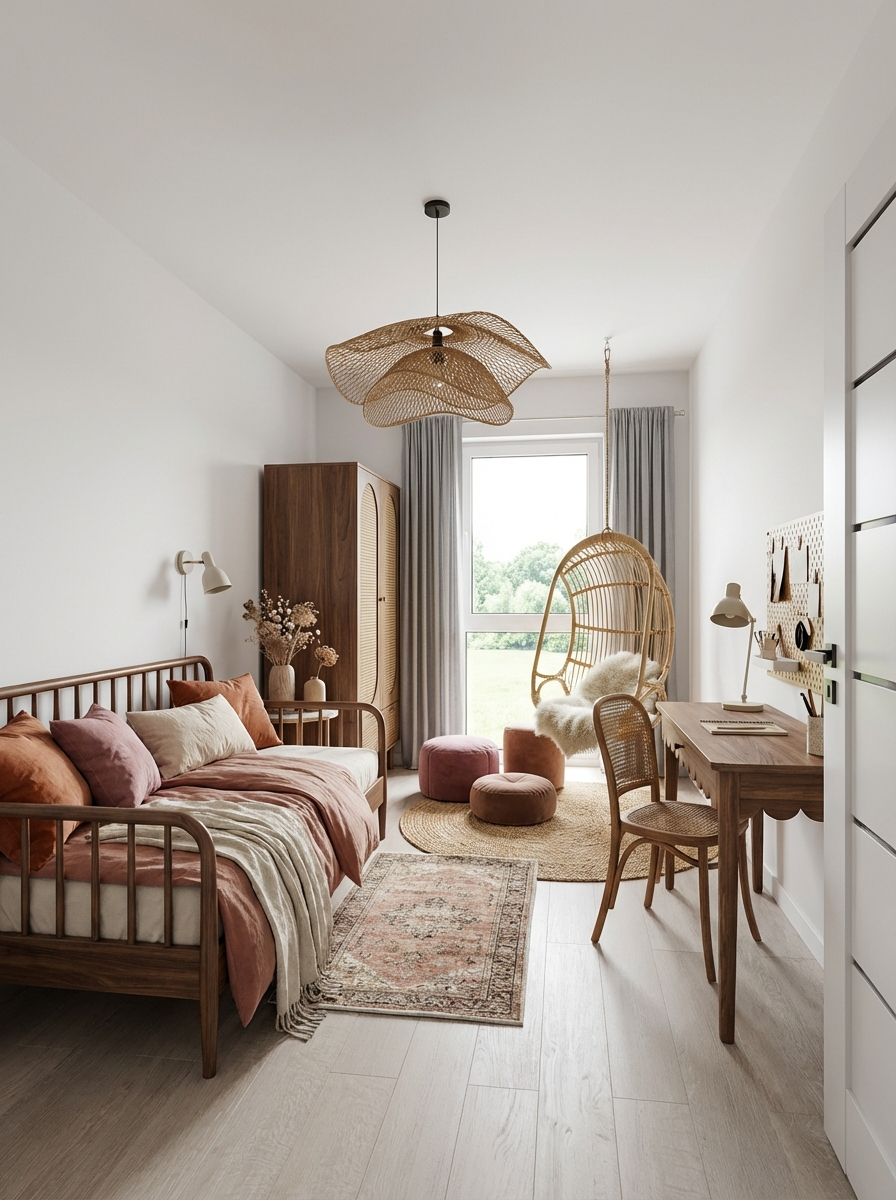
When a child starts school, many parents have the instinct: they need to buy a desk. This is understandable, as the desk is the most visible symbol of this change. In reality, however, starting school means much more than just a new piece of furniture in the room. It's a new stage in a child's life – the daily routine changes, responsibilities arise, new relationships arise, greater independence arises, and completely different needs arise. Therefore, when decorating a student's room, it's worth considering the broader perspective. It's not just about a place to do homework, but a space that will help a child navigate one of the biggest changes of the early years.
First grade, first notebooks, books, pencil case, backpack, a place to do homework. A room that was until recently primarily a space for play is suddenly about to take on a new role.
Developmental differences between preschool and school-age children
Between the ages of five and seven, significant changes occur in a child's emotional and social development. Five- and six-year-olds are typically extremely active, curious about the world, and open to new experiences. They enjoy being around their peers, enjoy being the center of attention, crave praise, and often test their abilities by demonstrating them to others. They continue to experience intense emotions, quickly shifting between joy and anger, and their reactions can be impulsive. At the same time, they increasingly understand the principles of cooperation, learn to negotiate their needs, and begin to appreciate others' perspectives.

A seven-year-old is entering a new stage of development . They often become more reflective, cautious, and less spontaneous than they were a few years earlier. Instead of constantly seeking new stimuli, they may need more peace, their own space, and time to think. They are more sensitive to the judgments of others, worry more easily, and begin to recognize the consequences of their actions. New concerns emerge about school, peer relationships, and meeting adult expectations. At the same time, their independence, ability to concentrate, and the ability to plan and achieve their own goals are developing.
These differences are crucial when designing a room. A younger child primarily needs space for movement, play, and imagination. A seven-year-old still needs space for activity, but quiet areas for studying, reading, resting, and quiet are becoming increasingly important. A well-designed room should, therefore, support a child at their current stage of development while also leaving room for future changes.
But a student's room is not just a desk .
Although a seven-year-old is clearly more mature than a five- or six-year-old, it's important to remember that they're still a child . Going to school doesn't mean their private space should overnight transform into a mini home office. The transition from preschool to school is a huge step in itself – with new responsibilities, a new daily routine, new relationships and expectations. It's a lot to take in at one time.
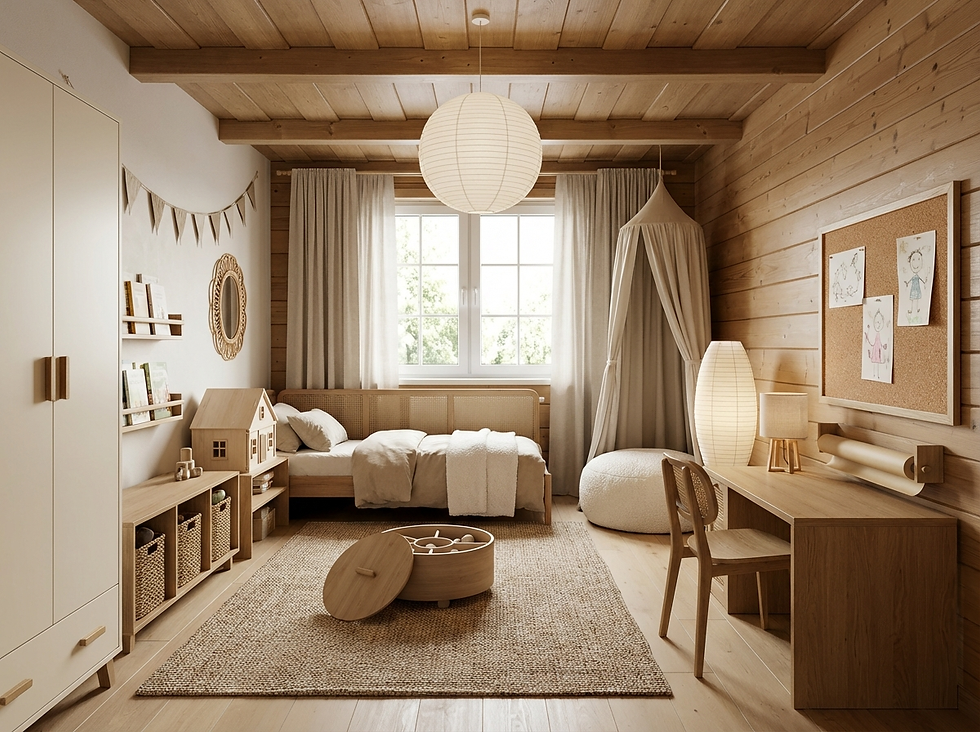
Therefore, it's good for the room to change gradually. Of course, it's worth introducing a study area and preparing a space for school supplies, but there's no need to immediately adapt the entire room to the new role. Children usually don't like sudden changes, and the transition to school can be challenging. The room can then serve as a stable, familiar space that still provides space for play, relaxation, and daily activities.
A child who starts school is still a child. They still need space for play, rest, exercise, their treasures, collections, books, and things that have nothing to do with learning. The stage changes, but the childishness doesn't disappear.
Therefore, when arranging a student's room, it is worth thinking not only about where the desk will be placed, but also about how the entire room will function on a daily basis.
A student's room is not a mini office either
With school comes a new daily rhythm. There are lessons, homework, books, notebooks, extracurricular activities, sometimes new responsibilities, and greater independence.
It's easy to fall into the mindset that the room needs to become more "grown-up," that we need to put away the toys, create more sophisticated décor, buy a large desk, and create a workspace.
But a school-age child rarely functions in such a simple way.
After school, they often need to rest first. Sometimes they want to play, lie down, stack blocks, read, talk, or simply be in their own space. Learning is important, but it's not the only function of a room.
A good student room doesn't tell a child, "now you have to be a little adult."
Rather, it helps him enter a new stage , but leaves room for who he still is: a child who learns, plays, rests, distracts, concentrates, collects things and slowly builds his independence.

Where to start when decorating a student's room?
Not on the color of the walls, the choice of desk or what looks nice in the photo.
It's best to start with the question: what will this room hold now?
Four worlds usually meet in a student's room:
science,
sleep and rest,
game,
storage.
If any of them don't have their own place, the room quickly becomes cluttered. Notebooks end up on the bed, toys on the desk, backpacks underfoot, and books wherever there's a spare space. It's not always a matter of "clutter." Often, the room simply lacks a clear layout.
So instead of starting with a shopping list, it's worth first seeing how you can divide the space into a few simple zones.
Study Zone: More Than Just a Tabletop and a Chair
A desk is important, but it does not solve the problem on its own.
A good study space isn't just about furniture. It's about small arrangements that help a child sit down, find the things they need, and maintain their attention for a moment.
There are a few things worth noting.
First: light . It's best to position the desk so that the child has access to daylight but isn't blinded by it. A good lamp is also useful, especially in autumn and winter, when studying often takes place after dark.
Secondly: distractions . If the desk is directly opposite a shelf full of toys, colorful boxes, and knick-knacks, it may be harder for a child to concentrate. The point isn't to create a blank wall and a sterile workstation. The point is to ensure the immediate area around the desk doesn't bombard the child with a thousand stimuli.
Third: keep things handy . Notebooks, crayons, pencils, scissors, glue, charger, books—if everything has a different place, a child quickly becomes discouraged. The simpler the system, the more likely it will be used.
Fourth: scale . The desk and chair should suit the child, not just the style of the room. A seat that's too high, too deep, or too uncomfortable could lead a child to choose the floor, the bed, or the kitchen table.
And this is also important: many children don't study independently at a desk for long hours at a time when they first start school . Sometimes, homework is done with a parent at the table. Sometimes a child needs closeness, help, or the presence of an adult.
Therefore, the desk should be ready for learning, but it doesn't have to pretend to be the center of the child's entire life from day one. Let's also remember to include space for an adult. It's good if there's room for an extra chair at the desk , and the tabletop is large enough for two people to sit comfortably. If space allows, consider a desk around 120 cm wide—it provides greater comfort both during learning and when working together with a parent.

Relaxation zone: you also need to unwind after school
We often plan a student's room around learning and forget about rest.
After all, a child returns from school after several hours of noise, social interaction, rules, commands, and stimuli. Even if they enjoy school, they may still be exhausted .
Therefore, a student's room needs a place that does not require action.
This could be a bed with soft pillows, an armchair, a pouffe, a rug, a small reading nook, or a quieter part of the room where everything isn't in plain sight.
It's not about a grand design. Sometimes a simple gesture is enough: fewer clutter around the bed, a calmer wall, less harsh lighting, a bookcase, a place for your favorite blanket.
This is especially important in small rooms, where each function overlaps with the next. If the bed is also a place for sleeping, reading, conversation, rest, and play, it's worth ensuring it isn't surrounded by excessive stimuli.
The student's room is meant to support learning, but it cannot constantly remind the child of their responsibilities.
Fun Zone: A Student is Still a Child
This is one of the most common mistakes when decorating a student's room: "growing up" the space too quickly.
School arrives, and parents want to declutter the room. Toys disappear, bookshelves, a desk, and more subdued colors appear. The room begins to look more mature, but the child still needs a place to play.
And very good.
Play for a school-age child doesn't end with their first school bag. It changes, but it's still important. It can be more constructive, creative, thematic, social, or more sedate. A child can still build, draw, create bases, arrange figures, collect stones, cards, books, posters, and trinkets.
If there's no room for these things in the room, they'll still appear. Just randomly: on the desk, on the floor, on the bed, on the windowsill.
That's why it's a good idea to leave a section of the room that's neither for studying nor sleeping. Even a small one.
It can be a carpet, a piece of floor, a low shelf, easy-to-access boxes, a shelf for current treasures, or a place where a child can leave a started building for longer than one evening.
A student's room doesn't have to be perfectly tidy. It should be manageable.

Storage: Fewer Systems, More Simplicity
As school progresses, more and more things come into the room (it never ends ;) ).
There's a backpack, books, exercise books, notebooks, art supplies, school supplies, PE kit, documents for parents, and sometimes an instrument, sports equipment, or supplies for extracurricular activities. Add to that toys, clothes, souvenirs, and everyday trinkets, and it's easy to understand why a student's room can quickly start to look chaotic.
Buying another shelf doesn't always help here. Sometimes a better question is: what should be visible and what should be hidden?
Children often benefit from simple solutions rather than elaborate organizational systems. One box for crafts. One shelf for school books. One space for a backpack. One container for "school" items. One drawer for supplies. It's not about perfect organization with labels for everything. It's about a layout that a child understands and can replicate, while also learning to organize and tidy their own space.
If putting away one item requires opening three boxes, moving a chair, and memorizing the category, the system probably won't last a week, and a reluctant child won't clean up after themselves.
The most common mistakes when furnishing a student's room
The first mistake is treating the desk as the only important decision.
A desk is necessary, but not enough. If it doesn't have good lighting, storage space, and relative peace, it's just another piece of furniture.
The second mistake is removing the fun from the room too quickly.
School-age children still need their childhood space. If play isn't happening, they'll move wherever they find space—often to a desk or bed.
The third mistake is overloading the room with functions.
A bed, a desk, a shelf, a wardrobe, a chest of drawers, shelves, a board, a tent, an armchair, baskets, decorations, posters, toys, books – everything can be beautiful individually, but together it can create the impression of a heavy, tiring interior.
The fourth mistake is creating a small command center in the student's room with a computer, console, games and unlimited access to the internet behind closed doors.
School-age children are still learning responsibility, self-control, and risk assessment, so using such devices should be done under reasonable adult supervision. We can compare the internet to a very busy, sprawling city. Would you leave your child there alone, without support, guidance, or a way to turn to you for help? Probably not.
The internet works similarly—only digitally. And digital doesn't necessarily mean less dangerous.
Therefore, it's a good idea to plan the space and device usage rules so that the child can gradually develop their skills, with a present and attentive adult nearby. Consider placing a shared computer in the parents' living room or bedroom, rather than in the child's room. The same applies to tablets or phones.
The fifth mistake is copying inspirations without checking whether they fit a specific room.
In an online photo, a desk by the window looks beautiful. But in your room, it might conflict with the radiator, cause poor lighting, not enough room for a chair, or cover the only convenient wall for storage.
The sixth mistake is decorating a room more for a photo than for everyday use.
A student's room should function in the morning, after school, in the evening, when it's messy, when it's tired, when it's packing a backpack, when it's doing homework, and when it's Saturday building with blocks. Not just for five minutes after cleaning up.
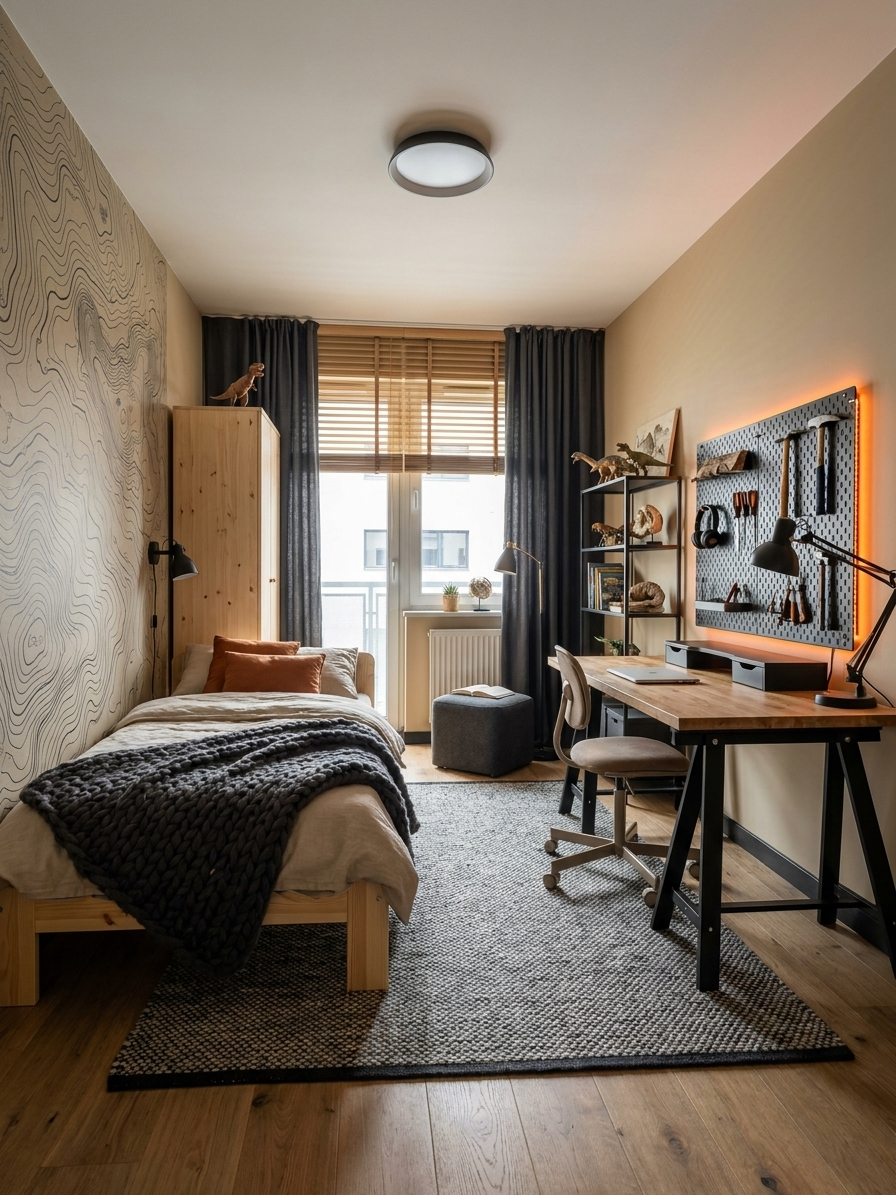
Before you buy new furniture, see the entire layout
Preparing a student's room often starts with shopping.
A parent chooses a desk. Then a chair. Then a lamp. Then it turns out a shelf would be useful. Then extra boxes. Then a place for books. And finally, the room feels cramped or disjointed.
Therefore, it is a good idea to reverse the order.
First, it's worth seeing how the room might work as a whole.
Where will the child study?
Where will he relax after school?
Where will the toys stay?
Where will the backpack be?
Where will the books and notebooks go?
Will there be any free floor space left in the room?
Won't the layout overwhelm the interior?
Will the child still feel that it is their room and not just a place for chores?
It is in moments like these that The Place can help.
Instead of starting by buying furniture and guessing, you can first see an idea that fits your interior. A photo of the room makes it easier to imagine where a study area might be located, how to combine it with relaxation and play, and whether the chosen design direction makes sense in the real space.
It's not about creating the perfect room from a catalog.
It's about seeing the possibilities before you make decisions that are hard to undo.
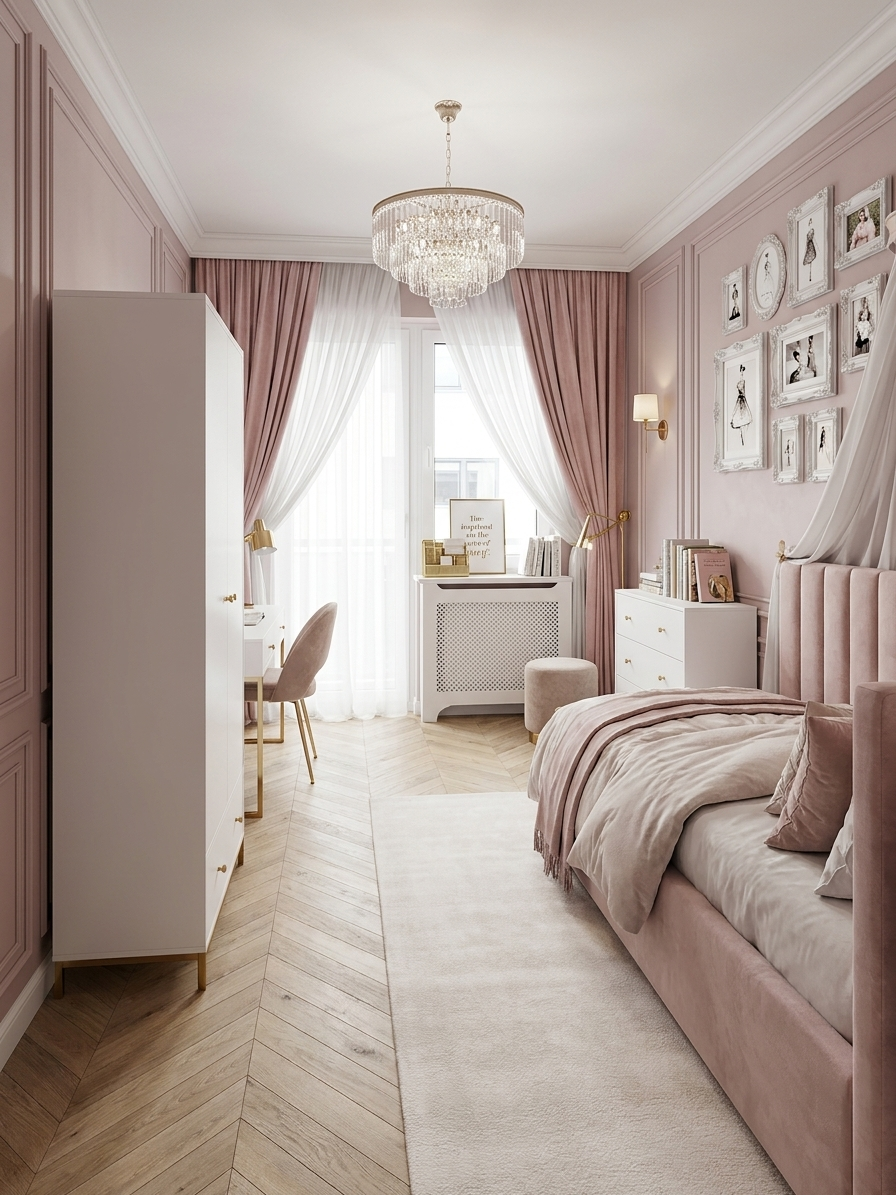
A student's room should be supportive, not overwhelming.
A good student room doesn't have to be big, perfect, or newly decorated.
It should be legible.
A child should know where he or she studies, where he or she rests, where he or she puts away his or her school stuff, and where he or she can still just be a child.
This is especially important at the beginning of school, when so much is changing: daily routines, responsibilities, expectations, relationships, and independence. A room can either facilitate this transition or add another layer of chaos.
So before you buy a desk, shelf, lamp and new accessories, stop for a moment.
Look at the room as a whole.
See what your baby really needs at this stage.
And if you want to see what such a layout could look like in your interior, Miejsce will help you see the idea adapted to the real room – before you start buying furniture, paints and accessories.


Comments