Baby room
- Aleksandra Czubaszek - Siłuch
- 3 days ago
- 5 min read

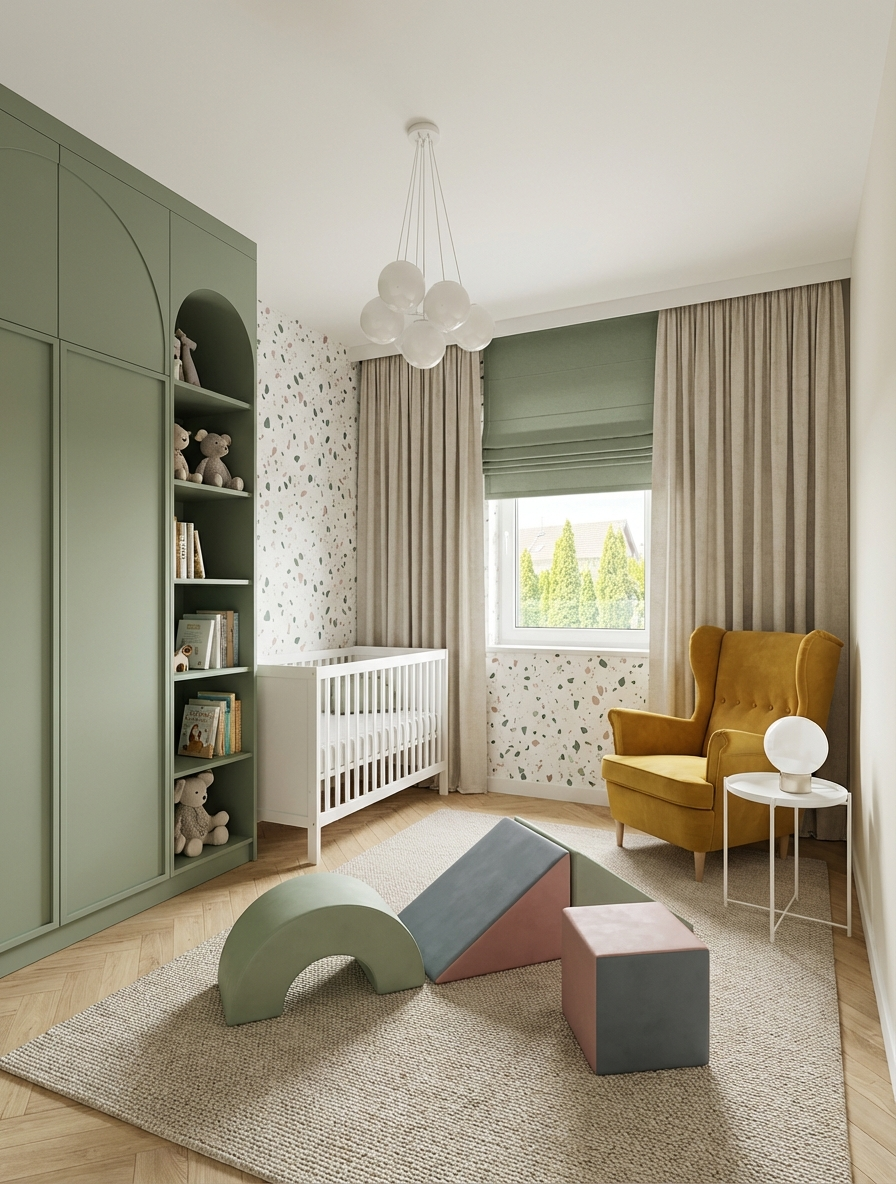
Decorating a baby's room often starts with inspiration. You save photos from Pinterest, browse cribs, dressers, changing tables, canopies, baskets, lamps, and wallpaper. After a while, everything looks beautiful—but it becomes increasingly difficult to answer the most important question:
will this look good in your room?
Because even the prettiest inspiration from the internet doesn't show your space. It doesn't take into account window layout, floor color, slopes, alcoves, lighting, or how much space will actually be left after adding a crib, dresser, and highchair.
At Miejsce, we start with exactly that: your room.
Based on photos of the interior, we create visualizations that help you visualize what a baby's room might look like in a specific style, color scheme, and layout. Not as abstract inspiration, but as a proposal embedded in a real space.
A baby's room should be beautiful, but also calm and functional.

When it comes to designing a baby's room, it's easy to fall into two extremes. Either create a very "childish" interior, full of small decorations, patterns, and random accessories. Or, conversely, create a space so minimalistic that it looks beautiful in photos, but it's difficult to imagine the daily diaper changes, feedings, and putting away of baby's clothes at night.
A well-designed baby room should combine several things:
it should be visually calm, because it is a space of sleep and tranquility.
It should have clear zones: sleeping, changing, storage and feeding.
It should be comfortable for the parent, because in the first months it is the adult who uses it most intensively.
And it should be flexible enough not to require a complete revolution in a year.
That's why Place visualizations aren't just about "pretty pictures." They're about deciding whether this direction makes sense for your room, your taste, and your budget.
See the room before you buy furniture and accessories
The biggest problem when decorating a child's room is that you make many decisions separately.
First you buy a crib, then a dresser, then a rug, then a lamp, then something for the wall. Each element may be beautiful on its own, but it's only together that they create an interior—or chaos.
Visualization allows you to test your direction in advance. You can see if a light, creamy base, warmer beiges, delicate greens, wood, a subtle safari motif, a forest vibe, a soft vintage style, or a more modern take on a child's room would work better.
This is especially important for a baby's room, because it's easy to buy too much. Too many decorations. Too many colors. Too much small furniture. Too many things that look cute but in practice just take up space.
The place helps you stop before shopping and see what the room will look like when it is finished.
It's still your room - just shown in a new version
At Miejsce, we work with a photo of your interior. This ensures the visualization is truly authentic. We maintain the overall room layout, lighting, proportions, and key spatial elements, and then demonstrate what the arrangement could look like in your chosen style.
This could be a subtle, bright baby bedroom with natural wood and soft fabrics.
It can be a warm room with a safari atmosphere, with beige, terracotta and rattan accessories.
It can be a forest room with subdued greenery and calm wallpaper.
Or a more elegant, classic version with a chest of drawers, a feeding chair and a delicate wall decoration.
It's not just that you see the effect that matters. It's that you see it in yourself .
The place works like an interior concept pre-designed by an architect
only instead of showing you the perfect room from a catalog, it adapts the idea to the realities of your space:
its layout, light, proportions, and possibilities.


You don't need to know how to achieve this effect
The visualization itself can explain a lot, but another question often arises: okay, it looks beautiful – but how do you actually do it?
That's why we add practical tips to our Smart and Premium packages to help you translate your visualization into real-world purchasing and design decisions. We offer suggestions on what to consider to achieve the look of your photos : what wall colors to choose, what type of furniture to look for, what materials will complement the look, how to avoid overloading the space, and which elements are most important for the overall atmosphere.
You don't need to be an expert in interior design. You don't have to dissect the visualization yourself. You'll receive direction, along with explanations of how to approach its implementation.
The place shows possibilities, but also organizes decisions
Our goal isn't just to create pretty images. We want to help you decide which direction to take with your child's room. And what to buy to achieve a cohesive effect.
Does this style suit your space?
Does this color scheme warm up the room or overwhelm it?
Is it better to choose a simple base and a stronger decoration, or vice versa?
Is it worth investing in wallpaper, or can a similar effect be achieved with color and accessories?
Does the room look calm or is there too much of everything?
That's what visualizations are for: to see, compare, and make your choice more confidently.
Baby's room can be ready now - and later
A well-planned baby room doesn't have to be a temporary space. If you choose a calming base, good storage, and furniture that isn't too baby-friendly, it will be easier to transform it into a toddler's room later.
Instead of designing a space from scratch every year, you can change only selected elements: a crib for a larger bed, a changing table for a regular dresser, diaper baskets for space for books and toys.
That's why visualizing a baby's room can be more than just inspiration for those first purchases. It can also be the beginning of a calm, thoughtful space that will evolve with your child.
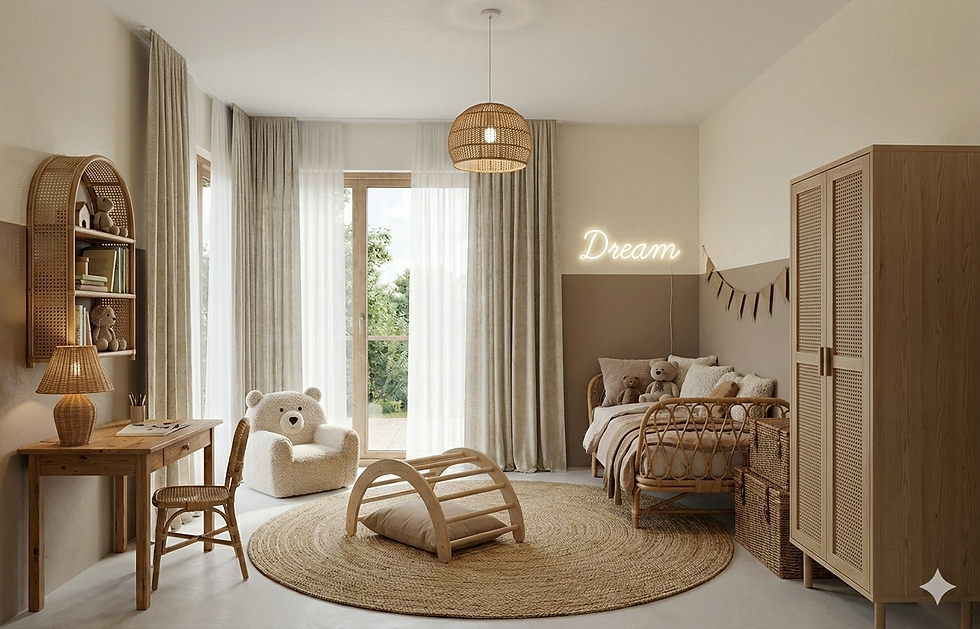
Want to see what your baby's room might look like?
All you need is a photo of the room and a few decisions: what kind of atmosphere you like, what colors suit you, what you need inside, and what effect you want to achieve.
The place will prepare visualizations based on your space, and in higher packages it will also help you understand how to translate this effect into actual choices: colors, furniture, accessories and the general direction of the arrangement.
Because a baby's room doesn't have to start with random purchases.
It can start with seeing what really suits your interior.
Comments